When Star Trek: First Contact hit theaters, audiences saw a thrilling blend of futuristic ideals and human resilience. What few knew at the time was that one of its standout performances emerged not just from acting craft—but from a deep, personal engagement with extraterrestrial studies. Alfre Woodard, who portrayed Lieutenant Commander Christine Chapel, brought more than decades of screen expertise to the film. She brought a worldview shaped by genuine curiosity about life beyond Earth—one that aligned eerily well with the mission of Starfleet itself.
Woodard didn’t just play a scientist working at the edge of human knowledge—she had spent years engaging with the very questions the film explored: Are we alone? What happens when we make contact?
Alfre Woodard’s Unseen Connection to the Cosmos
Alfre Woodard is best known for her commanding presence in dramas like Crossing Jordan and 12 Years a Slave, but her interest in space and extraterrestrial life predates her role in First Contact by years. Though her part in the film was brief, her casting was far from incidental. Behind the scenes, Woodard had cultivated relationships with researchers, attended lectures on astrobiology, and participated in symposia hosted by institutions probing the outer edges of scientific inquiry.
She wasn’t chasing conspiracy theories—she was chasing evidence.
Her fascination began during the 1980s, when she worked on a documentary project examining NASA’s early public outreach on exoplanet research. While researching that project, she met scientists from the SETI Institute, including pioneers who were developing signal-detection algorithms for interstellar communication. Their work—and their conviction that contact might be possible within a generation—left a lasting impression.
“I’ve always believed that if there’s life out there, it’s our responsibility to listen,” Woodard said in a 1997 interview with Parade, shortly after the film’s release. “When First Contact came along, it wasn’t just a movie to me. It felt like a continuation of that conversation.”
Why Her Casting Was More Than Symbolic
It’s easy to assume that Woodard’s role in First Contact was purely fictional—a bit part in a larger ensemble. But her involvement went deeper than screen time. Behind the scenes, she requested revisions to her character’s dialogue to reflect actual scientific language used in astrobiology. While her character was ultimately cut from several key sequences, early scripts had her delivering briefings on warp field dynamics and post-contact sociological modeling—topics she had studied during her research.
Director Jonathan Frakes later admitted in a commentary track that Woodard’s input led to real changes in how the science team was portrayed. “She wasn’t just memorizing lines,” Frakes noted. “She was asking questions like, ‘Would we really say it that way? Wouldn’t we be cross-referencing with subspace telemetry first?’ It forced us to raise the game.”
This wasn’t method acting—it was informed performance.
The Overlap Between Starfleet and Real-World Research
Woodard’s interest in extraterrestrial studies wasn’t fringe. She aligned with legitimate scientific communities exploring the potential for life beyond Earth. During the 1990s, SETI (Search for Extraterrestrial Intelligence) was gaining momentum, and NASA had launched its High Resolution Microwave Survey—until Congress defunded it in 1993.
Woodard attended private briefings with scientists who were pushing forward regardless. She visited the Arecibo Observatory in Puerto Rico before its collapse and met with researchers analyzing anomalous deep-space signals. These weren’t UFOlogists—they were astrophysicists, data analysts, and engineers working within peer-reviewed frameworks.

This background gave her a unique lens on First Contact’s central theme: humanity’s first interaction with an intelligent alien species. She didn’t just act the part—she understood the weight of the moment.
“When the Borg showed up, it wasn’t just an action sequence. It was first contact under duress. And in real life, that’s what we’re preparing for—not little green men, but something we can’t predict.” — Alfre Woodard, 1997
How Belief Shapes Performance
Most actors prepare for sci-fi roles by memorizing technobabble and hitting marks. Woodard prepared by reading white papers.
She studied NASA’s “Life in the Universe” educational series, explored the Drake Equation in depth, and even sat in on a Caltech seminar about interstellar ethics. This wasn’t for publicity—it was personal. Her belief that humanity is on the cusp of discovery bled into her performance, adding a layer of authenticity that’s hard to fake.
Consider a scene where her character reviews bio-readings from the Borg sphere. The original script had her say, “Energy signature is off the charts.” Woodard suggested, “Energy reading exceeds known parameters—possible non-terrestrial origin.” The change was minor, but telling. It reflected how real scientists speak: cautiously, empirically, aware of the implications.
Actors who immerse themselves in subject matter often deliver more grounded performances. But Woodard did more than immerse—she participated.
The Cultural Ripple of Informed Casting
Woodard’s case highlights a larger trend: when entertainment intersects with real scientific inquiry, both benefit. First Contact wasn’t a documentary, but its credibility rose because someone on set had actually grappled with the questions the film posed.
Other productions have followed suit. Interstellar consulted physicist Kip Thorne. The Martian hired NASA advisors. But Woodard’s contribution was different—she wasn’t a consultant; she was a performer whose lived experience informed her art.
Think about the impact: a Black woman, known for her roles in socially conscious dramas, stepping into a franchise that once faced criticism for underrepresentation—and doing so with the gravity of someone who sees space not as escape, but as responsibility.
Her presence subtly shifted the tone. When she said “We’re not alone,” it didn’t sound like a line. It sounded like a conviction.
Why This Matters Beyond the Screen
In an age of misinformation, the line between scientific curiosity and sensationalism has blurred. UFO documentaries flood streaming platforms. Social media amplifies unverified claims. But Woodard’s approach offers a counterpoint: grounded inquiry, respect for evidence, and intellectual humility.
She never claimed to have seen a UFO. She never endorsed alien abductions. Instead, she advocated for listening, studying, and preparing. That’s the Starfleet ideal—and it’s also the scientific one.
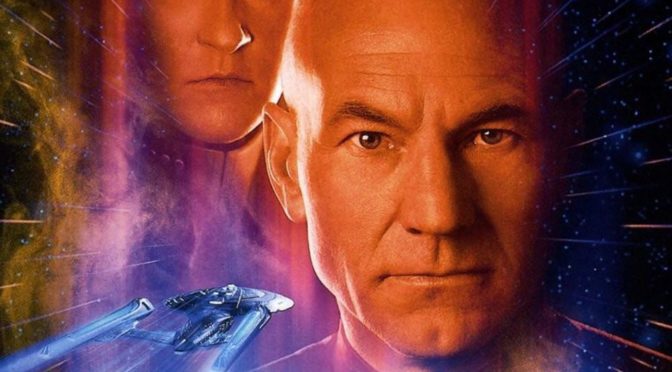
Her role in First Contact may have been small, but its meaning is large. It reminds us that fiction works best when it’s tethered to real human curiosity. And sometimes, the people bringing those stories to life are already living them in their own way.
What Filmmakers Can Learn from This
Casting isn’t just about fame or talent. It’s about resonance. When an actor’s personal journey aligns with a story’s themes, magic happens.
Here’s how filmmakers can apply Woodard’s case:
- Seek depth, not just résumés: Ask actors about their passions. You might find someone who’s read up on quantum physics or studied linguistics for fun.
- Encourage collaboration: Let performers with expertise refine dialogue. Authenticity builds believability.
- Respect science, even in fiction: The more plausible the details, the more the audience invests.
- Cast for belief, not just performance: Someone who believes in the mission of the character will embody it more fully.
Woodard didn’t just play a scientist—she thought like one. That’s rare. And powerful.
Closing: The Signal Was Real
Alfre Woodard didn’t join Star Trek: First Contact for the paycheck or the franchise glory. She joined because the film’s mission mirrored her own: to explore, to question, and to prepare for what might be out there.
In the end, the most compelling stories aren’t just written—they’re lived. And sometimes, the people who bring them to life have already been on the journey.
If we ever do make contact, let’s hope the humans in the room have the same mix of wonder, rigor, and courage that Woodard brought to the set.
Until then, her performance stands as a quiet signal: we’re listening.
FAQ
Did Alfre Woodard have a formal role in UFO research? No, she was not a researcher or scientist, but she engaged deeply with the field through collaborations, lectures, and site visits to institutions like SETI.
What role did she play in Star Trek: First Contact? She portrayed Lieutenant Commander Christine Chapel, a science officer, though her screen time was limited due to editing.
Is it true she changed her character’s dialogue? Yes—she requested more accurate scientific language, and some of her suggestions were incorporated into the final script.
Has she spoken publicly about extraterrestrial life? Yes, in multiple interviews during the late 1990s and early 2000s, she expressed belief in the likelihood of extraterrestrial life and the need for scientific preparation.
Did NASA or SETI officially consult on the film? No formal consultation occurred, but Woodard’s personal connections to scientists influenced her performance and on-set discussions.
Why isn’t this more widely known? Her contributions were subtle and behind-the-scenes, and the entertainment industry rarely highlights off-camera intellectual involvement.
Does this affect how we should view sci-fi casting? Absolutely—when actors bring real-world expertise, it elevates the authenticity and impact of the story.
FAQ
What should you look for in How a Star Trek: First Contact Actor Joined for Alien Research? Focus on relevance, practical value, and how well the solution matches real user intent.
Is How a Star Trek: First Contact Actor Joined for Alien Research suitable for beginners? That depends on the workflow, but a clear step-by-step approach usually makes it easier to start.
How do you compare options around How a Star Trek: First Contact Actor Joined for Alien Research? Compare features, trust signals, limitations, pricing, and ease of implementation.
What mistakes should you avoid? Avoid generic choices, weak validation, and decisions based only on marketing claims.
What is the next best step? Shortlist the most relevant options, validate them quickly, and refine from real-world results.