Every year, hundreds of workers suffer serious injuries—or worse—because machinery was accidentally re-energized during maintenance. The root cause? Missing, incomplete, or improperly executed lockout tagout (LOTO) procedure forms. These aren’t just paperwork; they’re life-saving documents that detail exactly how to isolate hazardous energy sources before work begins.
A well-designed lockout tagout procedure form ensures every technician follows the same standardized steps—every time. It eliminates guesswork, reduces human error, and provides legal protection for employers. More importantly, it protects people.
In high-risk environments like manufacturing plants, chemical facilities, and power generation sites, a single oversight can lead to electrocution, crushing injuries, or explosions. That’s why OSHA’s 29 CFR 1910.147 standard mandates documented procedures for controlling hazardous energy. The lockout tagout procedure form is the centerpiece of compliance.
Let’s break down what makes an effective form, how to create one, and how to integrate it into your safety workflow.
What Is a Lockout Tagout Procedure Form?
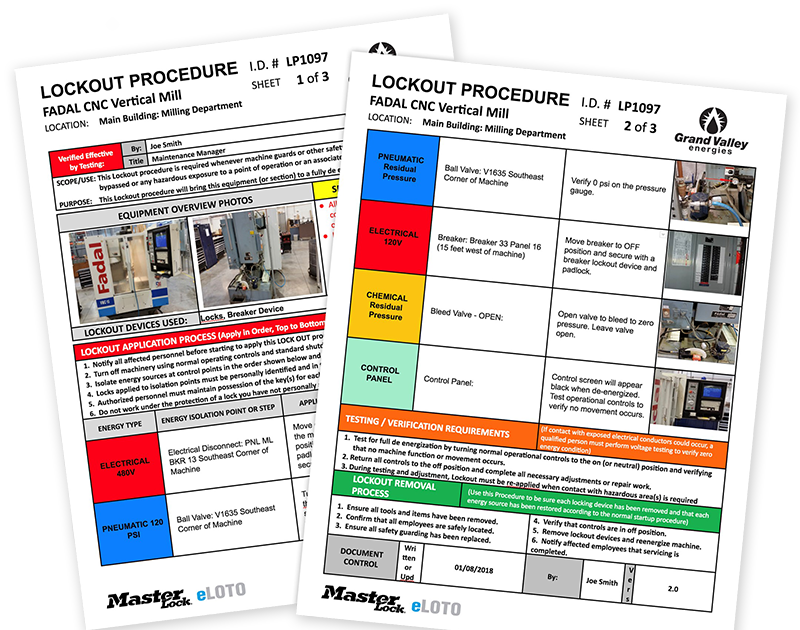
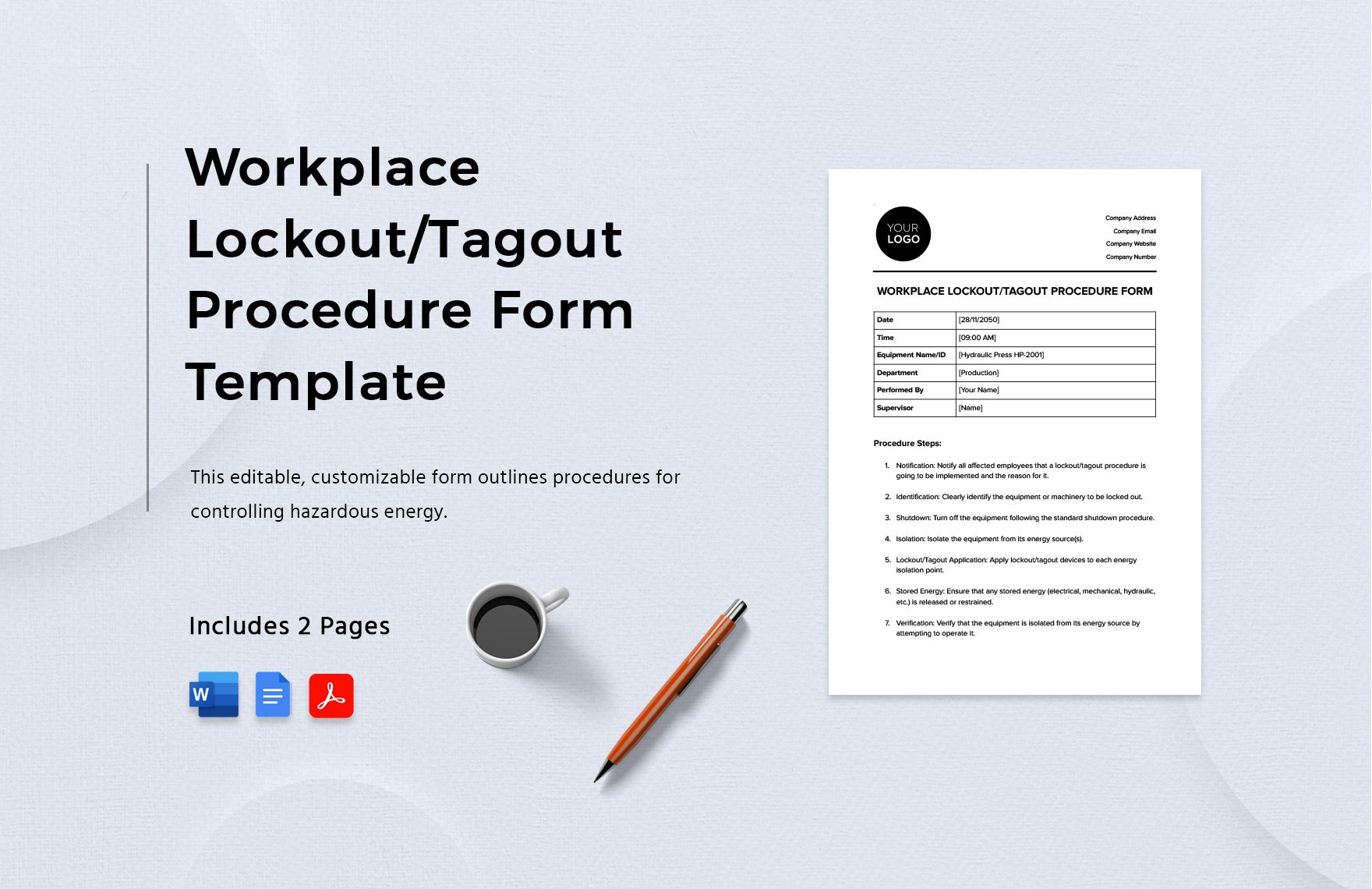
A lockout tagout procedure form is a standardized document that outlines step-by-step instructions for safely shutting down, isolating, locking, and tagging equipment before any maintenance or servicing occurs.
It’s not a one-size-fits-all template. Each form is specific to a machine or energy source and includes:
- Equipment identification
- Type and source of hazardous energy (electrical, hydraulic, pneumatic, thermal, etc.)
- Sequence of shutdown and isolation steps
- Location and type of energy-isolating devices
- Names and roles of authorized personnel
- Verification steps to confirm zero energy
- Procedures for re-energization
Unlike general safety policies, this form is used in real-time by technicians in the field. It must be clear, precise, and easy to follow—even under stress.
Real-World Example: Conveyor Belt Maintenance
Imagine a technician needs to repair a jammed conveyor belt in a packaging facility. Without a LOTO form, they might turn off the control switch but fail to lock out the motor disconnect. If another worker resets the system remotely, the belt could activate unexpectedly.
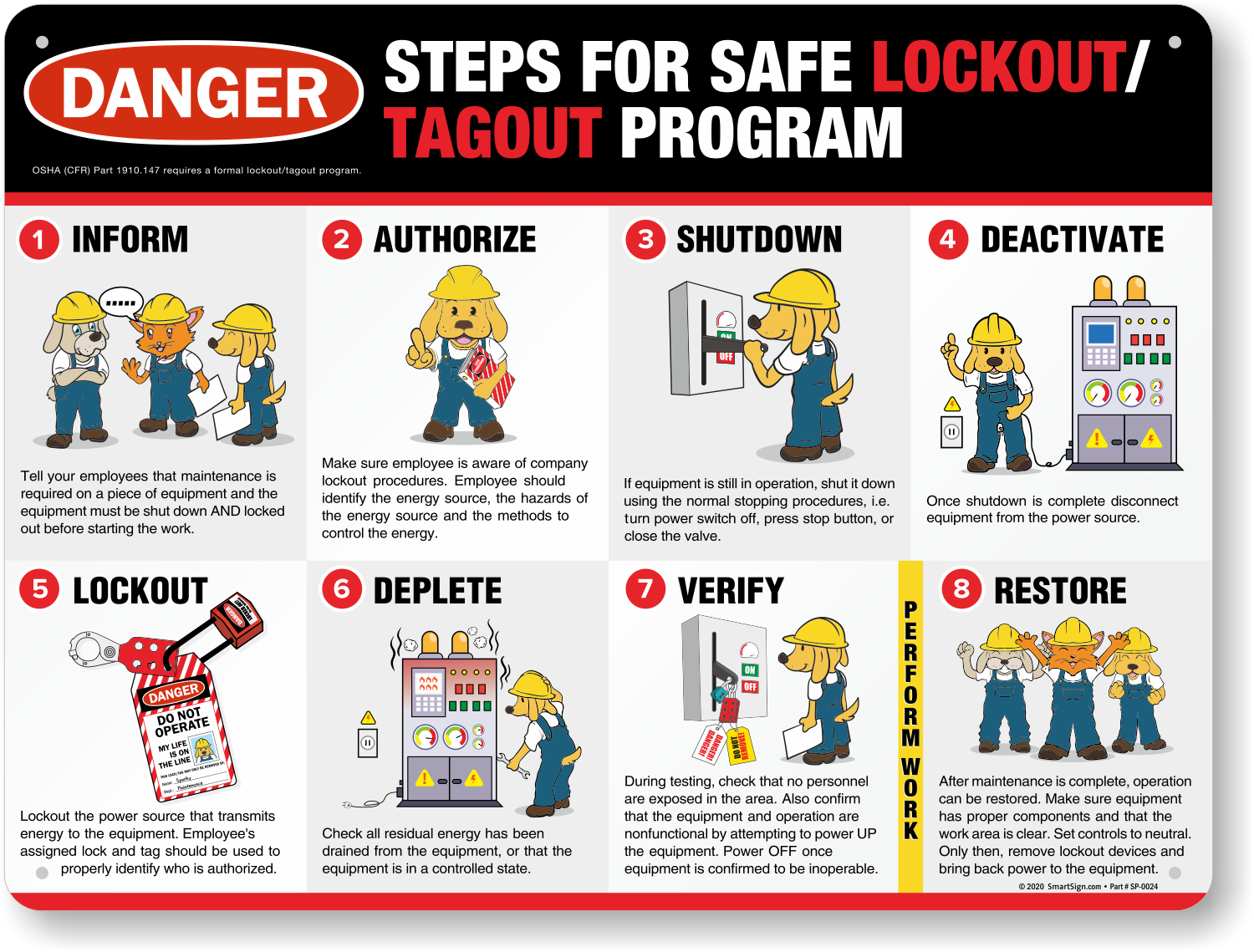
- With a proper LOTO form, the technician follows a checklist:
- Notify operations team
- Shut down conveyor via control panel
- Locate and lock out main motor disconnect (electrical energy)
- Close and lock hydraulic valve (if applicable)
- Apply personal lock and tag
- Attempt restart to verify zero energy
- Begin work
The form makes the process repeatable and auditable.
Why Most LOTO Forms Fail
Many organizations have LOTO forms—but most are ineffective. Common flaws include:
- Vague instructions: “Turn off power” instead of “Open breaker #4B in Panel 2 and apply lock.”
- Generic templates: One form used across multiple machines with different energy sources.
- Missing verification steps: No requirement to test for zero energy.
- Poor accessibility: Stored in binders no one checks or behind login portals technicians can’t access on the shop floor.
- Lack of updates: Forms not revised after equipment changes or relocations.
These gaps turn compliance exercises into liability traps. A 2022 OSHA report found that 70% of LOTO violations stemmed from inadequate procedures—not lack of training.
Key Elements of an Effective LOTO Procedure Form
To be both compliant and functional, your form must include these core components:
1. Equipment Identification Include make, model, serial number, location, and unique asset ID. Use photos if possible.
2. Energy Source Inventory List every type of hazardous energy:
- Electrical (voltage level)
- Hydraulic (fluid type, pressure)
- Pneumatic (air supply lines)
- Mechanical (springs, gravity-fed systems)
- Thermal (steam, hot surfaces)
- Chemical (stored reactive agents)
3. Step-by-Step Isolation Process Numbered actions in chronological order:
- Shutdown sequence
- Isolation points (valves, breakers, disconnects)
- Lock application (who applies, lock ID)
- Tag details (name, date, reason)
4. Verification of Zero Energy Require proof: “Test circuit with multimeter,” “Observe pressure gauge reads 0 PSI,” or “Manually check for movement.”
5. Re-Energization Protocol Outline steps to safely restore power:
- Confirm all tools removed
- Notify all affected employees
- Remove locks only by the original installer
- Clear area before restart
6. Sign-Off Section Include fields for:
- Authorizing supervisor
- Technician(s) performing work
- Date and time of lock application and removal
This section creates an audit trail—critical during inspections or incident investigations.
How to Create a LOTO Procedure Form: A Step-by-Step Workflow
Creating effective forms isn’t about filling out templates. It’s a field-based process involving safety officers, maintenance leads, and authorized employees.
Step 1: Conduct an Energy Audit Walk through each machine with a maintenance technician. Identify every energy source and isolation point. Take photos and label disconnects.
Step 2: Draft the Initial Form Use a standardized layout. Keep language imperative and specific: ❌ “Power should be turned off.” ✅ “Open circuit breaker CB-302 in Main Electrical Room and apply personal lock.”
Step 3: Validate with a Dry Run Have an authorized employee follow the draft form during a simulated maintenance task. Note any confusion or missing steps.
Step 4: Review and Approve Safety manager and operations lead sign off. Store the final version in an accessible format (print and digital).
Step 5: Train and Distribute Train all authorized employees on the form. Post copies near equipment or in digital work orders.
Step 6: Schedule Reviews Update forms annually or after any equipment modification, incident, or near-miss.
Common Mistakes to Avoid
Even experienced teams make errors. Watch for these red flags:
- Using manufacturer manuals as procedures – They don’t always cover site-specific isolation points.
- Skipping group lockout procedures – Multiple workers need individual locks and coordinated communication.
- Allowing “temporary bypasses” – This violates OSHA and creates extreme risk.
- Failing to include stored energy – Springs, capacitors, or elevated loads can release energy even after power-off.
- Not using durable forms – Paper forms laminated or printed on waterproof stock last longer in industrial settings.
One plant reduced LOTO-related incidents by 90% simply by switching from generic templates to machine-specific forms with photos and precise lock locations.

Digital vs. Paper LOTO Forms: What Works Best?
While paper forms are still common, digital solutions are gaining ground—especially in facilities with mobile workforces or complex maintenance schedules.
| Feature | Paper Forms | Digital Forms |
|---|---|---|
| Accessibility | Limited to binders or posted sheets | Available on tablets, phones, kiosks |
| Real-time updates | Delays in distribution | Instant sync across teams |
| Audit trails | Manual logging | Automatic timestamps, user logs |
| Integration | Standalone | Can link to CMMS, EAM systems |
| Durability | Prone to damage | Resilient, cloud-backed |
Digital platforms like Fiix, UpKeep, and Schneider Electric’s EcoStruxure enhance LOTO workflows by embedding procedure forms directly into work orders. Technicians complete steps on-screen, upload photos of locks applied, and sign off electronically.
However, digital isn’t always better. In remote or high-interference areas, paper remains reliable. The key is consistency—whatever format you use, ensure every technician follows the same version.
5 Realistic Use Cases for LOTO Procedure Forms
- Boiler Maintenance (Thermal & Pressure Energy)
- A facility shuts down a steam boiler for tube cleaning. The form lists isolation of fuel gas line, steam discharge valve, and electrical feed. Verification includes confirming 0 PSI and <100°F surface temp.
- Robot Cell Servicing (Electrical & Mechanical)
- A robotic arm requires lubrication. The form specifies locking out both the robot controller and hydraulic pump. Technician must test emergency stop function before entry.
- Grain Silo Cleaning (Gravity & Dust Hazards)
- Despite no moving parts, stored grain poses engulfment risk. The form includes lockout of auger systems and verification that all discharge points are sealed.
- Chiller Unit Repair (Electrical & Refrigerant)
- Form details disconnecting power and isolating refrigerant lines. Tag includes warning: “System contains R-410A under pressure—do not open.”
- Conveyor System Alignment (Multiple Energy Sources)
- Involves electrical, mechanical, and pneumatic isolation. Form requires locking out drive motor, releasing belt tension, and capping air lines.
Each scenario demands a unique form—no shortcuts.
Making LOTO Forms Part of Your Safety Culture
A form alone won’t prevent accidents. It must be embedded in your safety culture.
- Conduct monthly LOTO audits using the form as a checklist.
- Empower any employee to stop work if a procedure is missing or incomplete.
- Recognize teams that consistently follow LOTO protocols.
- Use near-misses to revise and improve forms—don’t punish, refine.
One refinery cut lost-time incidents by 65% in 18 months simply by auditing LOTO form usage and updating them quarterly based on technician feedback.
Final Thoughts: Treat LOTO Forms as Living Documents
A lockout tagout procedure form isn’t a compliance checkbox. It’s a dynamic safety tool that evolves with your equipment and workforce. Invest time in creating precise, machine-specific documents. Train rigorously. Audit consistently.
When an employee picks up a wrench to fix a machine, they should never wonder: Did I isolate everything? The form removes doubt—and saves lives.
Start today: audit one high-risk machine, build its LOTO form from scratch, and test it with your team. Repeat until every critical asset is covered.
Frequently Asked Questions
What should be included in a lockout tagout procedure form? A complete form includes equipment ID, energy sources, shutdown steps, lockout points, verification of zero energy, and re-energization instructions.
Who is responsible for creating LOTO procedure forms? The employer is responsible, typically through a team of safety officers, maintenance leads, and authorized employees.
Can one LOTO form cover multiple machines? No. Each machine or piece of equipment requires its own form due to unique energy sources and isolation points.
How often should LOTO forms be reviewed? At least annually, or whenever equipment is modified, relocated, or involved in an incident.
Are digital LOTO forms OSHA-compliant? Yes, as long as they are accessible, tamper-proof, and include all required elements of 29 CFR 1910.147.
Do all employees need to understand the LOTO form? Only authorized employees perform lockout, but affected employees must understand the process and never remove locks.
What happens if a LOTO form is not followed? Consequences include severe injury, OSHA citations, fines up to $15,625 per violation, and potential criminal liability in fatal cases.
FAQ
What should you look for in Lockout Tagout Procedure Form: A Complete Guide for Safety Teams? Focus on relevance, practical value, and how well the solution matches real user intent.
Is Lockout Tagout Procedure Form: A Complete Guide for Safety Teams suitable for beginners? That depends on the workflow, but a clear step-by-step approach usually makes it easier to start.
How do you compare options around Lockout Tagout Procedure Form: A Complete Guide for Safety Teams? Compare features, trust signals, limitations, pricing, and ease of implementation.
What mistakes should you avoid? Avoid generic choices, weak validation, and decisions based only on marketing claims.
What is the next best step? Shortlist the most relevant options, validate them quickly, and refine from real-world results.