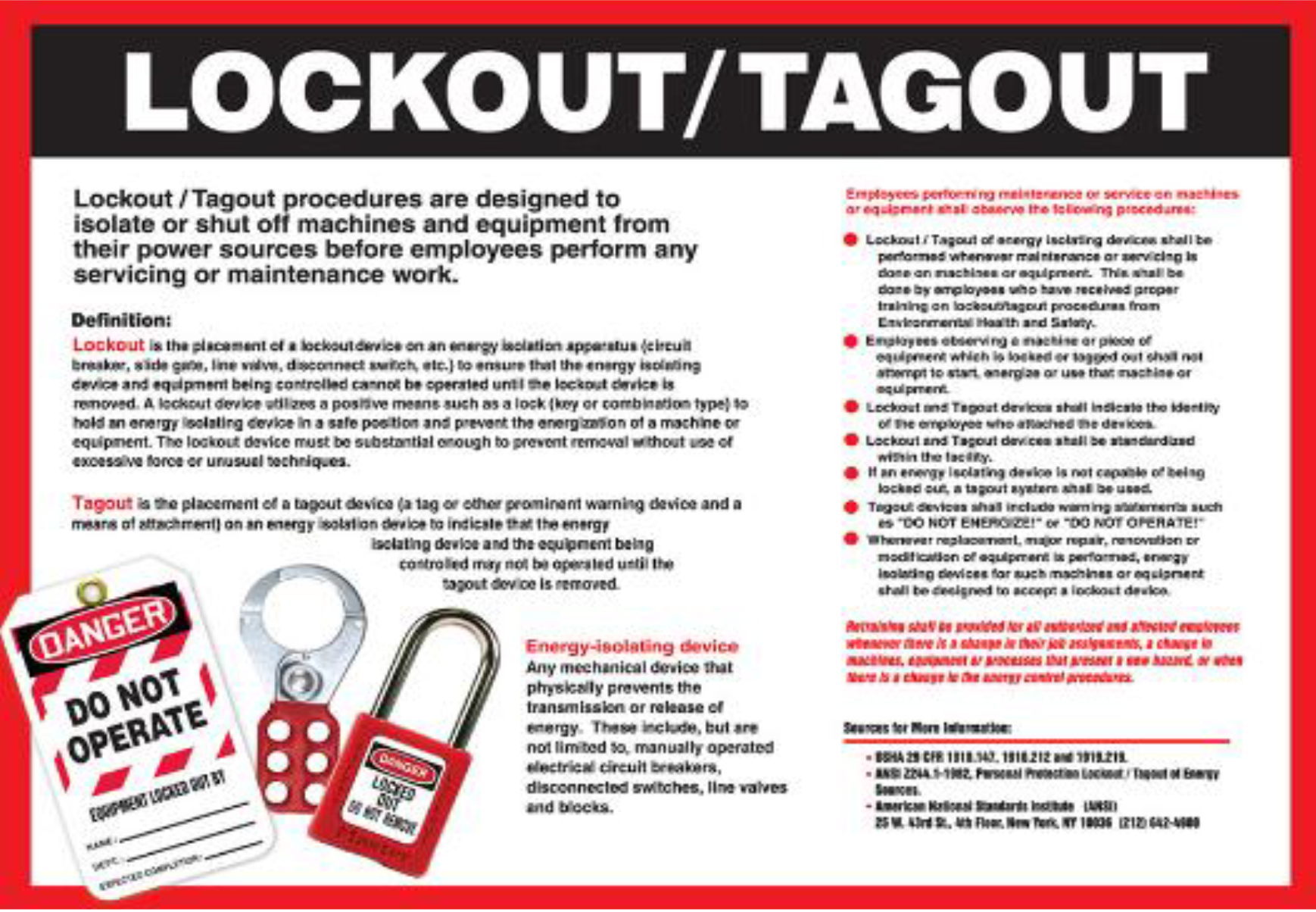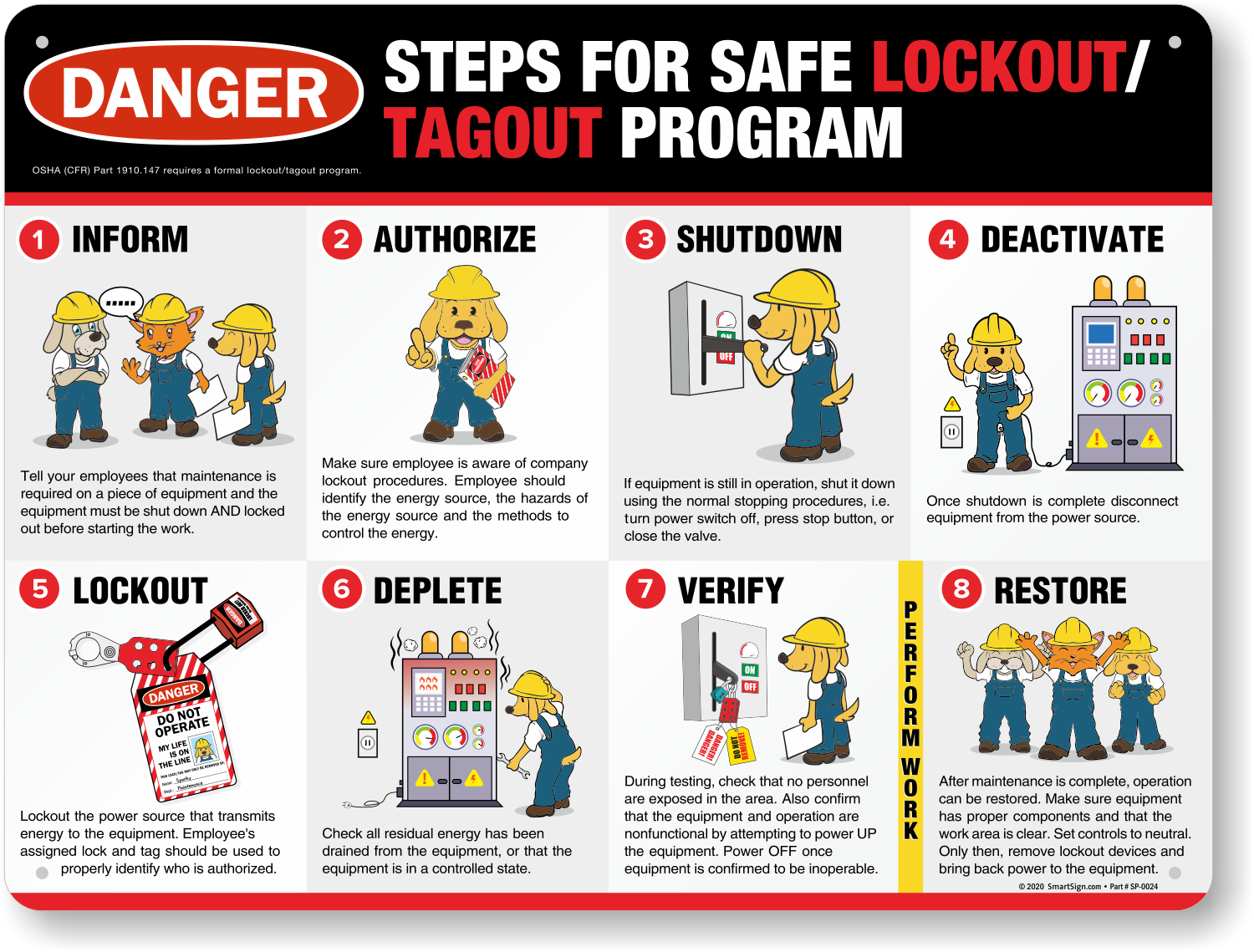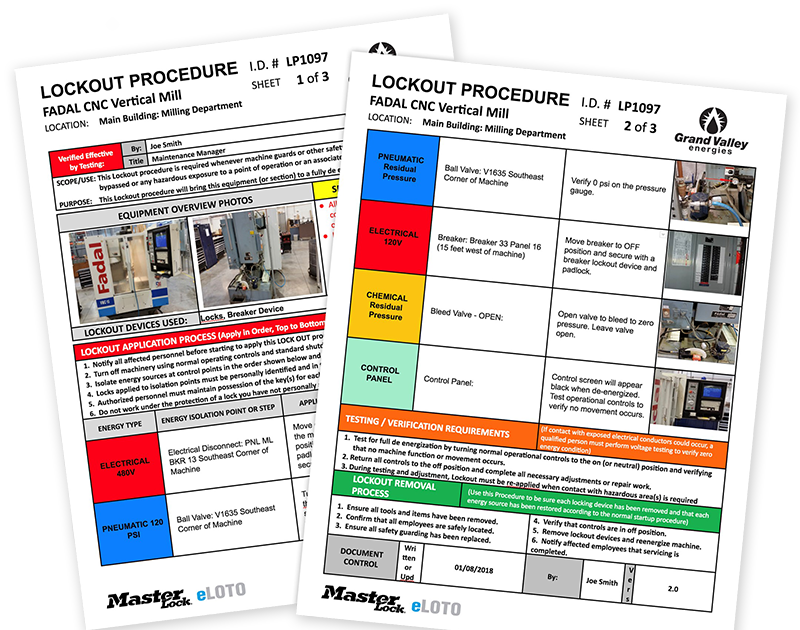
Workers are injured every year during equipment maintenance—not because machines fail, but because energy sources aren’t properly controlled. The solution? A well-documented, accessible, and consistently applied lockout tagout (LOTO) procedure. Among the most effective tools for ensuring consistency is a standardized lockout tagout procedures PDF—clear, shareable, and compliant with OSHA regulations.
Yet too many facilities treat LOTO PDFs as afterthoughts: outdated documents buried in shared drives, generic templates that don’t match real equipment, or worse—no documentation at all. That’s a risk no organization can afford.
This guide breaks down what makes a lockout tagout procedures PDF truly effective, how to build one that works in real-world environments, and where to find reliable templates and tools.
Why a Lockout Tagout Procedures PDF Matters
A lockout tagout procedures PDF isn’t just paperwork—it’s a frontline defense against accidental energization, unexpected startup, or release of stored energy during servicing.
OSHA standard 29 CFR 1910.147 mandates that employers implement a formal energy control program, including documented procedures. A PDF version serves several practical purposes:
- Accessibility: Available on tablets, print stations, or maintenance kiosks
- Consistency: Ensures every technician follows the same verified steps
- Training Aid: Used during onboarding and refresher courses
- Audit Readiness: Simplifies compliance checks and inspections
Without a clear, up-to-date PDF, even trained employees can make mistakes—like skipping steps or misidentifying isolation points. One steel fabrication plant reduced maintenance-related incidents by 72% after digitizing and standardizing its LOTO procedures in PDF form, with photos and step-by-step diagrams.
Key Elements of an OSHA-Compliant LOTO PDF
Not all PDFs are created equal. A generic template downloaded from an unverified source won’t protect your team—or your compliance status. An effective lockout tagout procedures PDF must include these core components:
#### 1. Machine or Equipment Identification Clearly name the equipment, including model number, location, and unique ID. Example: Hydraulic Press Model HP-3000 | Line B, West Bay | Asset #M-8842
#### 2. Energy Types Present List all forms of hazardous energy: - Electrical (480V main feed) - Hydraulic (stored pressure in accumulators) - Pneumatic (compressed air lines) - Mechanical (flywheel inertia) - Thermal (heated platens)
#### 3. Isolation Points Pinpoint exact lockout locations: - Main disconnect switch (Lockout Station #3) - Hydraulic valve block (Manual bleed valve + isolation lock) - Pneumatic shutoff (Quarter-turn ball valve, tagged at junction box)
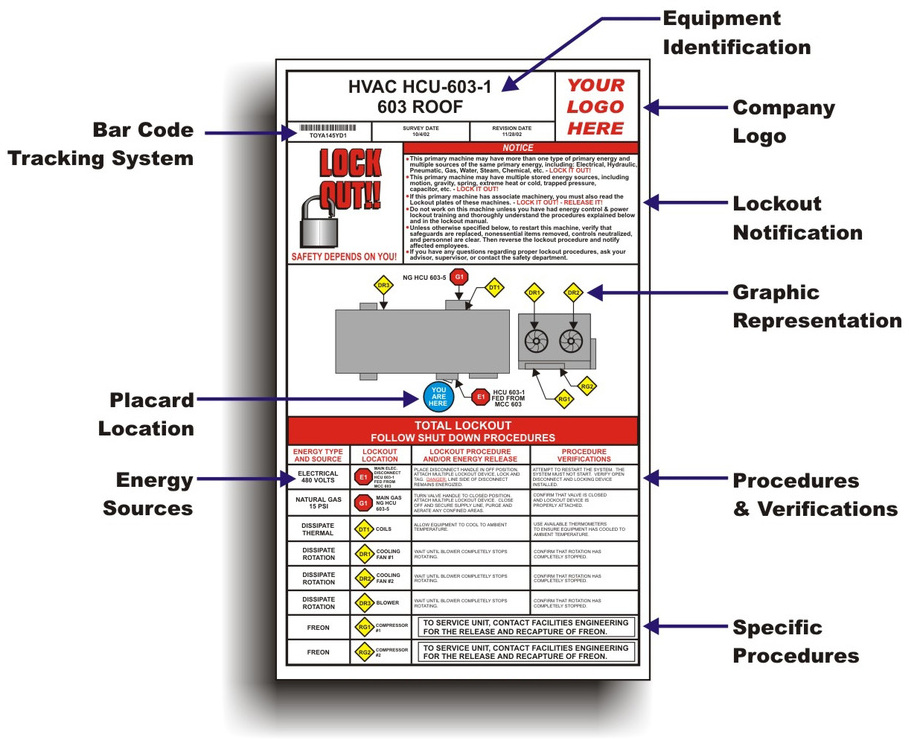
- #### 4. Step-by-Step Procedure Break down actions in order:
- Notify operations team of scheduled maintenance
- Shut down machine via emergency stop and HMI
- Isolate main electrical disconnect and apply personal lock
- Close and lock hydraulic isolation valve; bleed residual pressure
- Depressurize pneumatic lines using manual bleed valve
- Verify zero energy state using test instruments
- Attach tag with worker name, date, and reason
#### 5. Verification of Isolation Include a line like: “Verification: Use a voltage tester on primary conductors and observe no movement in mechanical components after attempted startup.”
This isn’t optional—OSHA requires verification, and your PDF must reflect that.
#### 6. Group Lockout Instructions (if applicable) For multi-craft work, define: - Role of authorized coordinator - Use of group lockout box - Step for each worker to apply their own lock
#### 7. Release and Restart Protocol Detail how to safely remove locks: - Confirm all tools removed - Ensure guards reinstalled - Notify all affected employees - Remove locks only by original installer
Leave nothing to interpretation.
Common Mistakes in LOTO PDFs That Undermine Safety
Even with procedures in place, errors in design or implementation weaken their value. Watch for these pitfalls:
- Using one template for all machines: A CNC mill and a conveyor belt have different energy sources and shutdown needs. Customize each PDF.
- Missing visual aids: Text-only documents are harder to follow under stress. Embed labeled diagrams or photos.
- Outdated versions in circulation: Update revision dates and implement a version control system (e.g., “Rev. 3 – Updated 04/2024”).
- No accountability section: Omitting signature lines or reviewer names reduces traceability.
- Assuming understanding: Jargon like “isolate prime mover” confuses newer workers. Use plain language.
One food processing facility discovered that 38% of maintenance staff had never read their LOTO PDF because it was “too technical.” After simplifying language and adding visuals, compliance rose to 96%.
How to Create a Custom LOTO Procedures PDF
Creating an effective document doesn’t require expensive software—just a disciplined approach.
#### Step 1: Conduct a Machine-Specific Hazard Assessment Walk through each piece of equipment with maintenance leads. Identify every energy source and point of isolation.
#### Step 2: Draft the Procedure Use a consistent format across all machines. A standard header helps: - Equipment: - Department: - Prepared by: - Reviewed by: - Effective Date: - Next Review Date:
#### Step 3: Add Visuals Take clear photos of: - Lockout points - Control panels - Energy-isolating devices
Annotate them directly in the PDF using arrows and labels.
#### Step 4: Review with Authorized Employees Have experienced staff perform a dry run using the draft PDF. Note where confusion arises.
#### Step 5: Convert to PDF and Distribute Use Adobe Acrobat or free tools like LibreOffice to create a password-protected, non-editable PDF. Store it in a central safety portal and on-site kiosks.
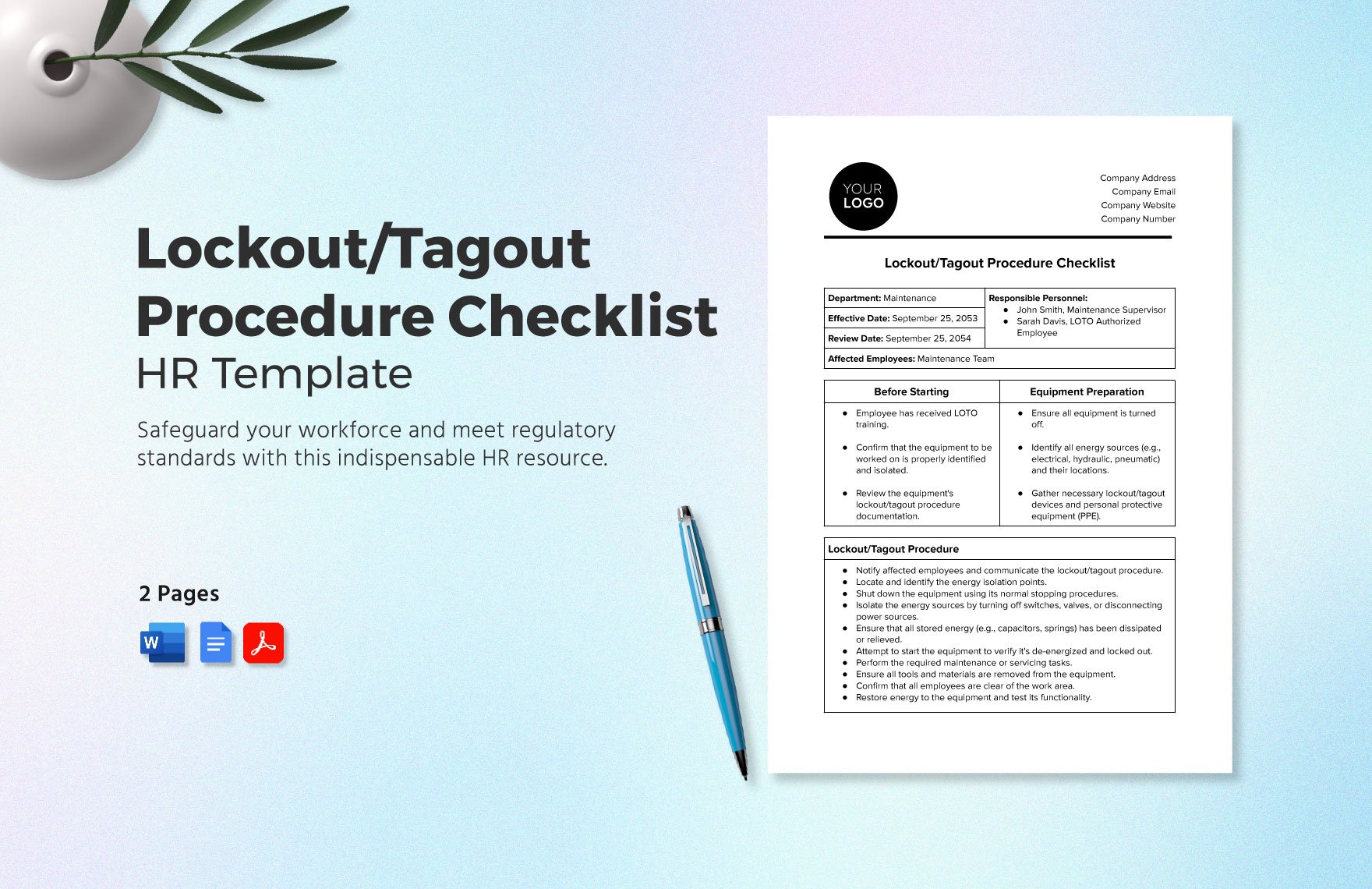
Update annually or after equipment modifications.
Templates and Tools for Building LOTO PDFs
While customization is essential, starting with a strong template accelerates development. Here are five reliable sources for lockout tagout procedures PDF templates:
| Tool | Key Features | Best For |
|---|---|---|
| OSHA.gov LOTO Guidelines | Free official resources, regulatory language | Compliance baseline |
| Creative Safety Supply | Editable PDFs with diagrams, multilingual options | Quick deployment |
| SafetyStore.com | Industry-specific templates (manufacturing, HVAC) | Sector-focused teams |
| EHS Daily Advisor | Downloadable kits with training logs | Integrated safety programs |
| LockoutTagout.com | Interactive PDFs with fillable fields | Digital workflows |
Avoid templates that lack space for equipment-specific details or verification steps. A good template is a scaffold—not a finished product.
Integrating LOTO PDFs into Daily Operations
A PDF that sits unopened is useless. Embed it in your workflow:
- Pre-job briefings: Open the PDF on a tablet before maintenance begins.
- Training sessions: Use PDFs as handouts with quizzes on key steps.
- New hire onboarding: Include PDF review in orientation.
- Audit prep: Print relevant procedures 24 hours before inspections.
One automotive parts plant loads all LOTO PDFs onto ruggedized tablets mounted near each machine. Technicians scan a QR code to pull up the correct document—reducing errors and saving time.
For digital adoption, consider converting PDFs into interactive formats using tools like PDF Annotator or Notability, allowing techs to check off steps in real time.
What to Do When Procedures Conflict
with Reality
Even the best PDF can fall short when machinery changes or shortcuts emerge.
- If a technician discovers a missing isolation point during maintenance:
- Stop work immediately
- Report the discrepancy to safety management
- Update the LOTO PDF with the new step
- Re-train affected personnel
Treat every near-miss or deviation as a chance to improve the document.
One paper mill avoided a potential fatality when a mechanic noticed a secondary hydraulic line not listed in the PDF. The procedure was updated the same day, and a company-wide alert was issued.
Finalizing Your Lockout Tagout Procedures PDF Strategy
A lockout tagout procedures PDF is more than a compliance checkbox—it’s a living document that protects lives. The most effective versions are specific, visual, regularly updated, and deeply integrated into daily operations.
Start by auditing your current documentation. Is it machine-specific? Is it accessible during maintenance? Does it reflect actual conditions on the floor?
Then, revise or create new PDFs using the framework above. Test them in real scenarios, not just on paper. Share them where they’re needed most—at the point of use.
Safety isn’t about having the right document. It’s about having the right document, in the right hands, at the right time.
Publish it. Train on it. Enforce it. Repeat.
Frequently Asked Questions
What should be included in a lockout tagout procedures PDF? It should list equipment details, energy sources, isolation points, step-by-step shutdown and verification steps, group lockout rules, and restart protocols.
Are free LOTO PDF templates reliable? Some are a good starting point, but they must be customized for your equipment and reviewed by authorized personnel.
Who is responsible for creating LOTO procedures? The employer, typically through safety officers or maintenance supervisors, using input from authorized employees.
Can a LOTO PDF be digital instead of printed? Yes, as long as it’s accessible at the worksite—via tablets, kiosks, or mobile devices—during maintenance.
How often should LOTO procedures be reviewed? Annually, or whenever equipment is modified, after an incident, or if a procedure is found to be inadequate.
Do all employees need to read the LOTO PDF? Authorized employees who perform maintenance must be trained on it. Affected employees should understand its purpose.
What happens if a LOTO PDF doesn’t match the machine? It creates a serious safety risk. The document must be updated immediately and re-approved.
FAQ
What should you look for in Lockout Tagout Procedures PDF Guide for Workplace Safety? Focus on relevance, practical value, and how well the solution matches real user intent.
Is Lockout Tagout Procedures PDF Guide for Workplace Safety suitable for beginners? That depends on the workflow, but a clear step-by-step approach usually makes it easier to start.
How do you compare options around Lockout Tagout Procedures PDF Guide for Workplace Safety? Compare features, trust signals, limitations, pricing, and ease of implementation.
What mistakes should you avoid? Avoid generic choices, weak validation, and decisions based only on marketing claims.
What is the next best step? Shortlist the most relevant options, validate them quickly, and refine from real-world results.