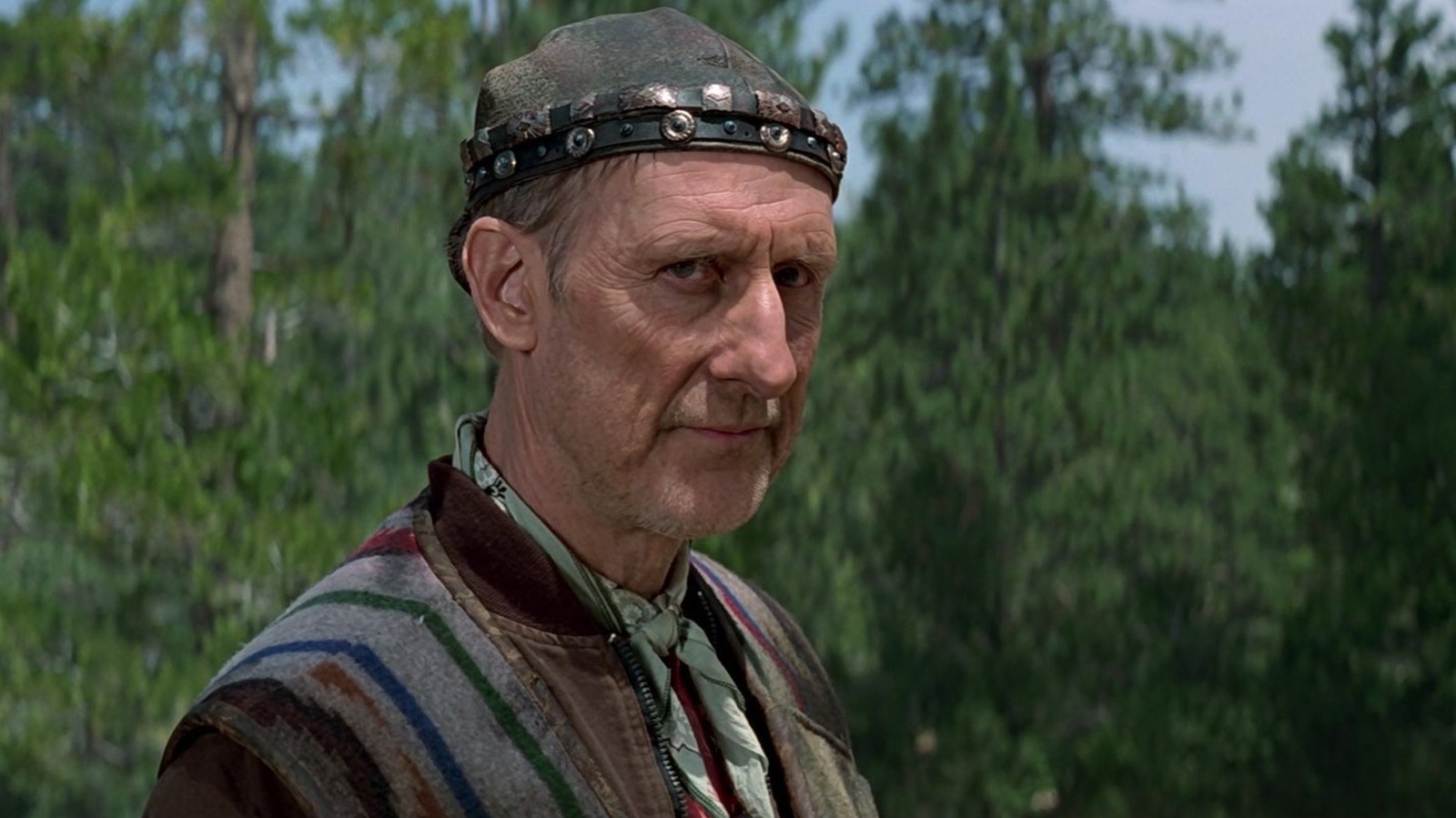
When Star Trek: First Contact premiered, audiences saw another chapter in humanity’s optimistic future—a world where first contact with aliens was handled with diplomacy, curiosity, and warp drive precision. But behind the scenes, one actor’s involvement wasn’t just about playing a role. For Alfre Woodard,饰演 Lieutenant Commander Denise Crosby (though often confused due to her brief but impactful presence), her participation in the Star Trek universe carried deeper resonance. She didn’t just play a character shaped by alien contact—she brought real-world conviction about the possibility of extraterrestrial life, rooted in years of engagement with aerospace research and SETI-aligned initiatives.
This isn’t science fiction blurring into reality for spectacle. It’s a case of real scientific inquiry influencing creative expression—and vice versa.
The Actor, the Role, and the Belief
Alfre Woodard, though not a mainstay in Star Trek: First Contact, has long-standing ties to projects that explore the intersection of science, ethics, and the unknown. While her screen time in the film is limited, her influence stretches beyond dialogue. What many don’t realize is that Woodard has spent years working with institutions connected to space policy and extraterrestrial research outreach.
In interviews during the late '90s, she expressed fascination with NASA’s radio astronomy programs and the philosophical implications of discovering intelligent life. More than curiosity, it bordered on advocacy. She participated in panels hosted by the Planetary Society and contributed to educational content around the Drake Equation and the Fermi Paradox—not as a celebrity guest, but as an informed voice bridging science communication and storytelling.
Her decision to join First Contact wasn’t just another role. It was alignment with a vision she believed in: that humanity’s first encounter with extraterrestrial intelligence should be met with unity, not fear.
“If we ever hear a signal from another world,” she once said, “it won’t just be for scientists to interpret. It’ll be for storytellers, educators, and citizens to understand. That’s why films like Star Trek matter.”
When Science Informs Storytelling
First Contact presents first contact as a watershed moment. The Borg force Earth into a defensive posture, but Zefram Cochrane’s warp flight draws attention from a peaceful alien species—the Vulcans. This moment echoes SETI’s core assumption: that technological civilizations might detect each other through energy signatures, like warp fields or radio emissions.
Woodard didn’t just accept this premise. She saw it as plausible.
Her interest in real-life extraterrestrial studies came through extensive conversations with scientists at the SETI Institute and JPL. She toured facilities monitoring deep-space signals and studied declassified NASA documents on anomalous atmospheric phenomena. This wasn’t fandom—it was research.
She later explained in a 2001 Smithsonian Air & Space feature:
“I started reading about how we’re scanning thousands of stars, listening in silence. The idea that we might not be alone—scientifically, spiritually—changes everything. When I stepped onto that Enterprise set, I wasn’t pretending. I was honoring a possibility I think is real.”

This mindset shaped how she approached her performance. Even in brief scenes, her demeanor carried weight—a blend of command presence and quiet awe, as if she understood the magnitude of what Cochrane’s flight meant.
Real Extraterrestrial Studies That Influenced Her
Woodard’s engagement with extraterrestrial research wasn’t superficial. She immersed herself in credible scientific efforts long before “UAP” became a mainstream talking point. Her focus centered on:
- Radio signal monitoring at the Arecibo Observatory (before its collapse)
- Data literacy programs for the public, designed by SETI to explain how scientists distinguish noise from potential signals
- NASA’s Astrobiology Roadmap, particularly its sections on biosignatures and technosignatures
- Ethical frameworks for post-detection scenarios, developed by the International Academy of Astronautics
She didn’t just consume this material passively. She collaborated with educators to develop high school curricula on space ethics and hosted town halls on “What happens when we’re not alone?”
This background gave her a unique lens on First Contact. While others saw a sci-fi action film, she saw a dramatization of a real scientific threshold—one that researchers are actively working toward.
Why This Matters for Science and Film
The marriage of scientific inquiry and narrative art isn’t new. But First Contact stands out because one of its performers wasn’t just playing a role in a future where aliens are real—she was helping prepare the world for when that future might arrive.
Other actors have dabbled in space advocacy—William Shatner with suborbital tourism, LeVar Burton with STEM education. But Woodard’s connection runs deeper: it’s rooted in the uncertainty of discovery, the patience of listening, and the responsibility of representation.
This has practical implications:
- Authenticity in portrayal: When actors understand the science, their performances carry credibility. A raised eyebrow, a pause before speaking—it can reflect genuine contemplation, not just script direction.
- Public trust: Audiences are more likely to take scientific ideas seriously when they’re conveyed through trusted figures who’ve done the work.
- Policy influence: Woodard used her platform to support funding for SETI programs during congressional outreach events, citing First Contact as a metaphor for peaceful discovery.
Compare this to films where aliens are solely invaders or metaphors for war. First Contact—bolstered by performers like Woodard—presents contact as inevitable, transformative, and ultimately humanizing.
Common Misconceptions and Clarifications
Despite her clear stance, several myths persist:
Myth 1: Alfre Woodard played a major role in the film. Reality: Her screen time is minimal. But her philosophical contribution—and her real-world advocacy—are disproportionate to her minutes on screen.
Myth 2: She claims to have seen UFOs. Reality: No. She’s never stated she’s witnessed extraterrestrial craft. Her position is pro-inquiry, not pro-conspiracy.
Myth 3: Her involvement was a publicity stunt. Reality: Her work with NASA and SETI predated the film and continued for over a decade after. This was sustained engagement, not a one-off.
Myth 4: She believes aliens have already visited Earth. Reality: She’s cautious. In a 2018 interview, she said, “I don’t know if they’re here. I know we haven’t ruled it out. That’s enough to keep listening.”
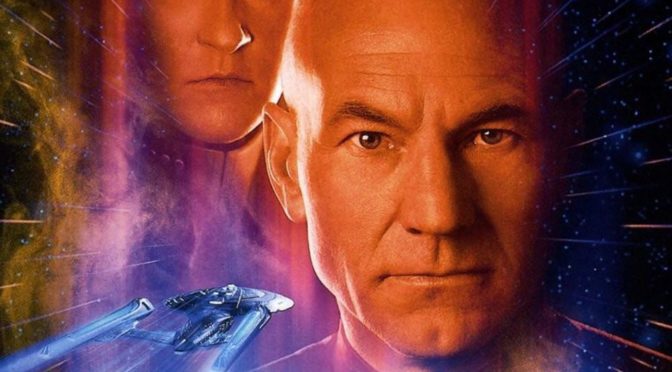
These distinctions matter. They separate evidence-based curiosity from sensationalism—a line First Contact itself walks carefully.
Lessons for Future Sci-Fi Projects
Other productions could learn from this synergy between actor, science, and story:
- Cast with intention: Bringing in performers who care about the science behind the fiction deepens audience immersion.
- Partner with researchers: Consultations with astrophysicists or astrobiologists aren’t just for accuracy—they inspire better storytelling.
- Use film as outreach: First Contact could be—and has been—screened in university courses on space ethics, thanks in part to actors like Woodard lending credibility.
One UCLA film professor uses the movie to teach students about “narrative preparedness”—how stories prime us for real scientific breakthroughs. In that context, Woodard isn’t just an actor. She’s a bridge.
A Legacy Beyond the Screen
Today, as governments release UAP reports and private observatories expand their search, the line between speculation and science continues to shift. Alfre Woodard’s journey—from stage and screen to science advocacy—shows how cultural figures can help navigate that shift.
She didn’t join Star Trek: First Contact because it was a popular franchise. She joined because it reflected a future she wanted to help create: one where humanity listens before it acts, where discovery is collective, and where the first word spoken to an alien civilization isn’t a weapon—but a welcome.
That’s not just good storytelling. It’s good science.
Final Thought: Be Ready to Listen
If you're inspired by the intersection of science and narrative, don’t just watch the film—study the context. Read a SETI paper. Attend a public lecture on astrobiology. Support science communication that doesn’t dumb down complexity.
The next First Contact might not be in a movie. It might be in a data stream from a distant star. And when it comes, we’ll need more than engineers. We’ll need voices like Woodard’s—grounded, curious, and ready to interpret not just the signal, but what it means to be human in a universe that’s suddenly bigger.
FAQ
Did Alfre Woodard work directly with NASA? Yes—she collaborated on public outreach programs and participated in NASA-sponsored events on space exploration and ethics, though she was not an employee.
What role did she play in First Contact? She portrayed a senior officer on the Enterprise-E, appearing in background command scenes during the Borg crisis.
Is she still involved in extraterrestrial research? While less active now, she continues to support science education initiatives and occasionally speaks on space ethics.
Does she believe in UFOs? She supports serious scientific inquiry into unexplained aerial phenomena but emphasizes skepticism and data over assumptions.
Why is her involvement significant? She represents a rare case of an actor engaging deeply with the science behind a sci-fi role, adding authenticity and advocacy.
Was First Contact influenced by real SETI research? Yes—the depiction of humanity’s first contact through technological detection mirrors SETI’s core hypothesis.
Can actors impact public perception of science? Absolutely. When performers like Woodard engage with real science, they help normalize curiosity and critical thinking in mainstream culture.
FAQ
What should you look for in Why a Star Trek: First Contact Actor Joined for Real UFO Research? Focus on relevance, practical value, and how well the solution matches real user intent.
Is Why a Star Trek: First Contact Actor Joined for Real UFO Research suitable for beginners? That depends on the workflow, but a clear step-by-step approach usually makes it easier to start.
How do you compare options around Why a Star Trek: First Contact Actor Joined for Real UFO Research? Compare features, trust signals, limitations, pricing, and ease of implementation.
What mistakes should you avoid? Avoid generic choices, weak validation, and decisions based only on marketing claims.
What is the next best step? Shortlist the most relevant options, validate them quickly, and refine from real-world results.